How to Organize a Coloring Activity at Home or in the Classroom
Distributing coloring sheets seems simple, but there is a big difference between “taking up time” and organizing an activity that really brings benefits of concentration, creativity and calm. Whether you're planning an afternoon at home with your children, or preparing an activity for an entire class, a few simple precautions make all the difference in the outcome — both in the children's behavior during the activity and in what they take away from it.
Why It's Worth Planning the Activity

When the activity has no structure — scattered pages, no theme, no defined time — it is common for children to quickly lose interest or for the activity to generate more confusion than calm. A minimum of planning (choosing the topic, preparing the material in advance, setting an approximate time) transforms the experience and significantly increases involvement, especially in a group.
How to Organize at Home
Space and material
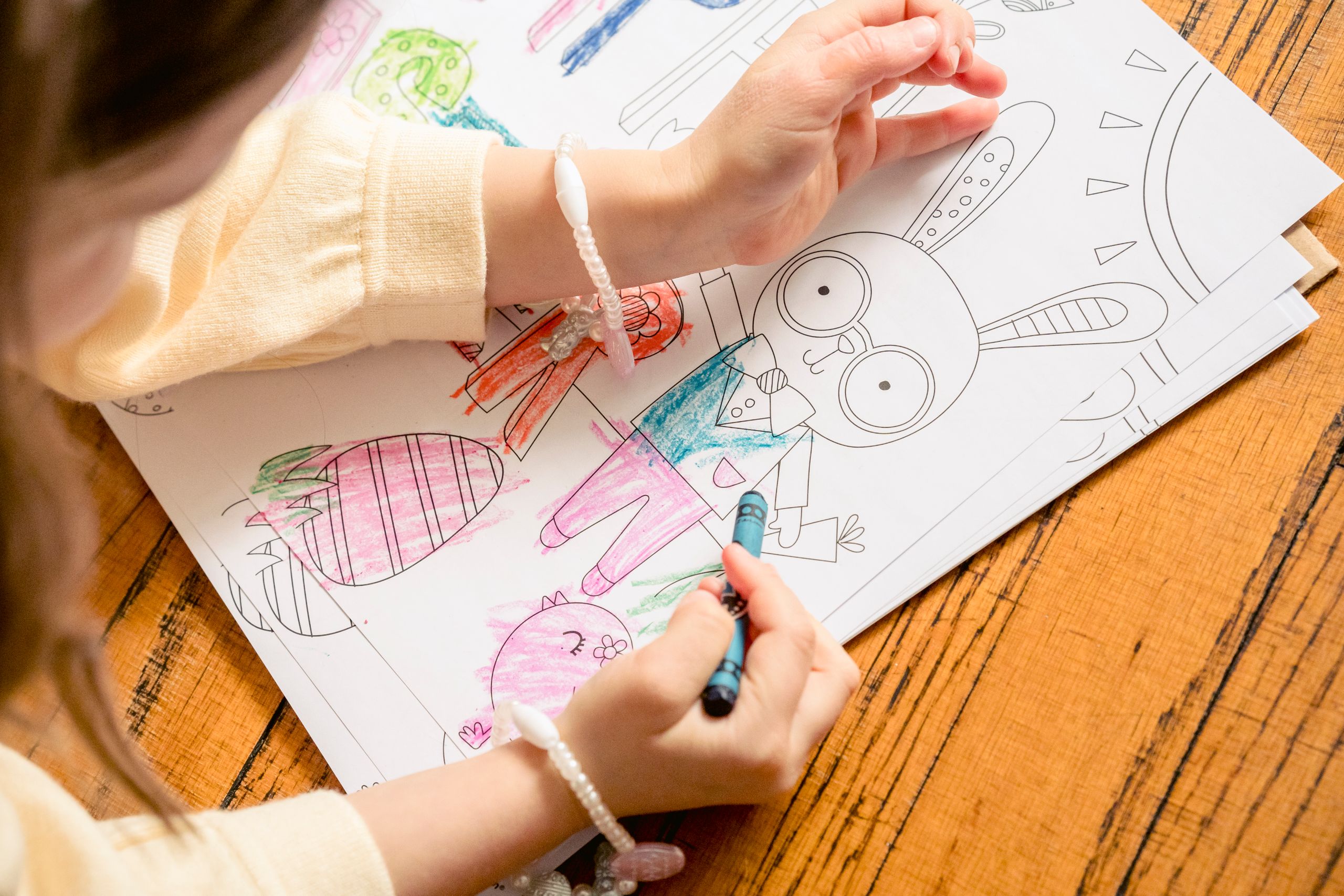
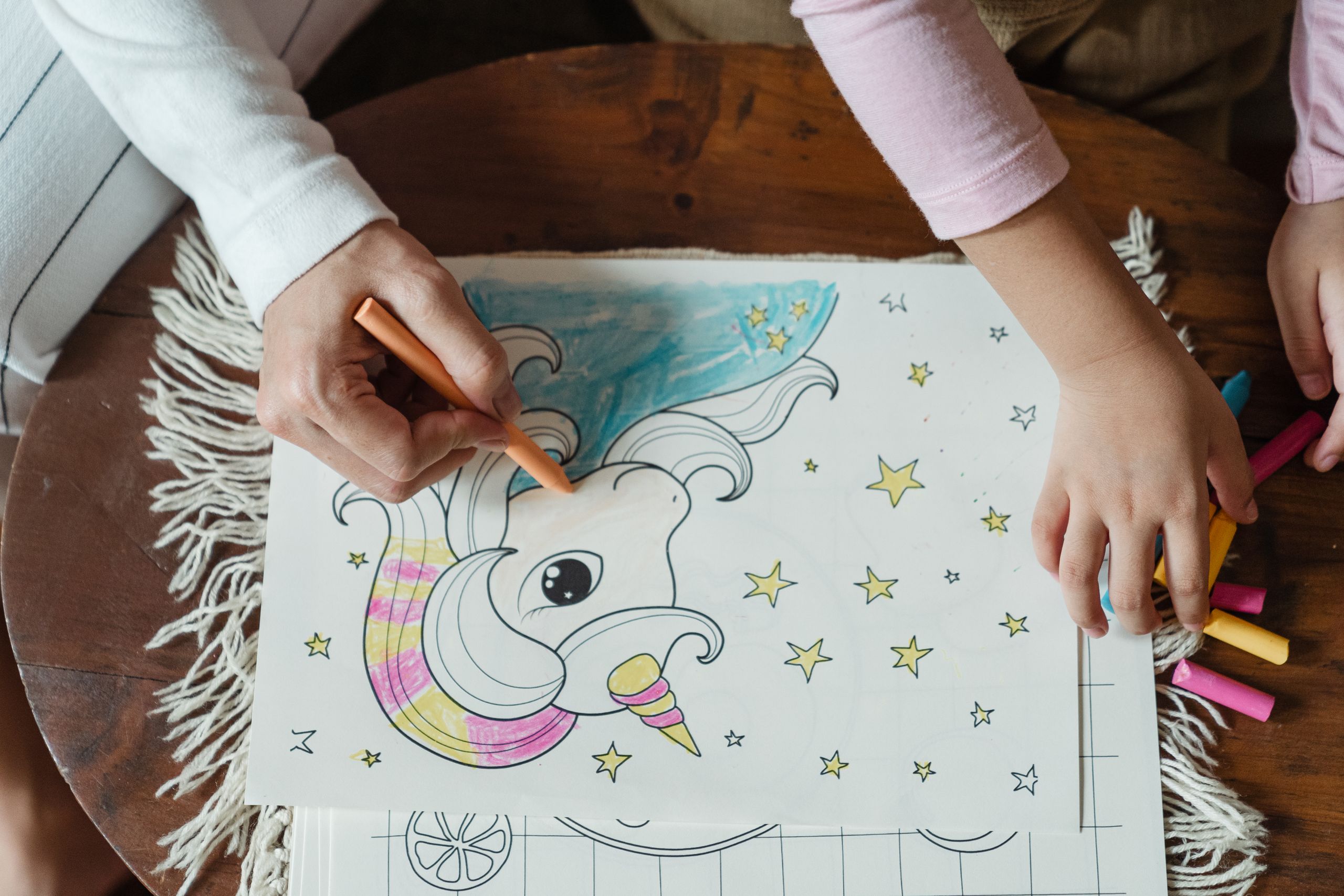
Choose a stable surface, with good natural light if possible, and prepare the materials before calling the child — already printed sheets, accessible pencils or markers, and a tablecloth or protection if you are using materials that can stain. Having everything ready avoids interruptions mid-activity, which are often the main reason for loss of interest in younger children.
Routine and duration
15 to 25 minute sessions work well for most ages. Trying to extend it beyond that, especially with younger children, tends to generate fatigue and loss of quality in the activity. If you notice signs of frustration or distraction, it is better to finish at that point than to persist — the positive association with the activity is more important than finishing the drawing.
How to Organize in the Classroom
Individual activity vs. in group
In a school context, coloring can function both as an individual transition activity (for example, between subjects, to “reset” the class's attention) and as a group activity with a common theme, in which each child colors a part of a larger collective drawing. This second approach is particularly effective for working on cooperation and reduces competition between students for having “the best drawing”.
Manage different skill levels in the same class
In a class, it is normal for there to be very different levels of fine motor skills and patience. A simple solution is to always have two or three levels of drawing complexity available for the same theme, allowing each child to choose what they are most comfortable doing, without feeling compared to their peers.
Theme Ideas By Occasion
Linking the theme of the drawing to something relevant to the moment naturally increases interest:
- School season: animals, numbers and letters, to reinforce content already seen in the classroom.
- Festive seasons: Christmas, Easter, Halloween or Carnival, which tend to generate extra enthusiasm.
- Free activity: characters, vehicles or nature, chosen by the children themselves, useful when the objective is just to relax without curricular connection.
Common Mistakes When Organizing This Activity
Some frequent mistakes reduce the positive effect of the activity: choosing drawings that are too complex for the age of the group, which generates frustration instead of satisfaction; constantly correct the way the child is coloring (“wrong” colors, lines out of line), which takes away spontaneity and pleasure from the task; and not giving any time limit, which in a group context tends to lead to dispersion and a loss of general focus for the class.
Frequently Asked Questions
How many children can I have in the same group activity?
There is no hard limit, but groups of between 4 and 8 children tend to be easier to follow closely, especially when there are different levels of motor skills involved.
Is it better Printable drawings in black and white or with a colored background?
For the coloring activity itself, the ideal is Printable just the outline in black and white, without a background color — this gives the child complete freedom of choice and prevents the result from looking “incomplete” if the colors chosen do not match the original example.
Does this activity work well for children who have difficulty concentrating?
Yes, and it is often recommended for exactly this purpose. The low-risk, repetitive nature of the activity helps train sustained attention gradually, without the pressure associated with more traditional school tasks.
Conclusion
A little planning — choosing the topic well, preparing the material in advance and adjusting the difficulty level to the group — turns coloring from a simple pastime into a truly productive activity, both at home and in the classroom. The secret is to always adapt to the age and the moment, instead of treating all sessions in the same way.